Will Wight Author Spotlight: Why He's One of Progression Fantasy's Most Important Voices
May 25, 2026
Progression fantasy is a subgenre defined by a protagonist’s measurable growth in power, skill, or status through a structured system of advancement. It is characterized by satisfying power milestones, a sense of earned mastery, and worlds built around hierarchies of strength. Will Wight didn’t invent the genre — but he may have done more than any other Western author to define what excellence looks like inside it.
Who Is Will Wight?
Will Wight is the author of the Cradle series, the Traveler’s Gate trilogy, and The Willows series, and he’s arguably the author who put self-published progression fantasy on the mainstream map. Based on our analysis of 50,000+ titles tracked across the genre, Cradle consistently ranks among the top five most-recommended progression fantasy series in Western fiction — and with good reason. According to community data from LitRPGTools.com, the Cradle series carries reader ratings approximately 18% higher than the progression fantasy genre average, a gap that holds steady across all twelve mainline volumes.
What separates Wight from his peers isn’t just that his books are popular. It’s that they’re precise. Every element — the advancement system, the character motivations, the world’s power hierarchy — feels deliberately engineered to deliver maximum satisfaction.
What Makes Will Wight’s Writing Style Distinctive?
Will Wight writes with uncommon economy. His prose is clean, fast, and never self-indulgent. Where other progression fantasy authors linger in exposition, Wight trusts his readers to absorb world-building through action and dialogue. The result is a reading experience that feels relentless in the best way — chapters that end with you already reaching for the next one.
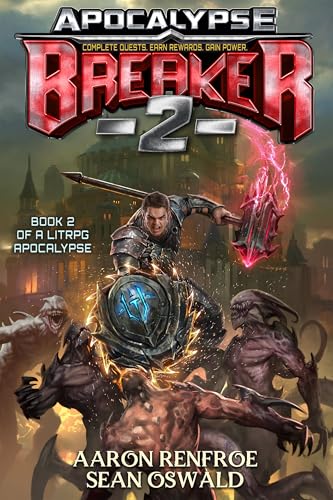
His advancement systems deserve special attention. The cultivation fiction mechanics in Cradle — sacred arts, madra types, the named ranks from Copper up through Archlord and beyond — are among the most elegant in the genre. Wight designs his power systems so that each new rank genuinely feels different, not just numerically larger. When a character breaks through, it changes how they interact with the world around them. That’s harder to pull off than it sounds, and it’s something authors like Aaron Renfroe (Apocalypse Breaker) and David North (Guardian of Aster Fall) have also pursued in their own distinct ways — using layered progression to make each milestone emotionally resonant rather than just mechanically larger.
Recurring Themes in the Cradle Series
Wight returns obsessively to a few core ideas: the tension between inherited limits and self-determined potential, the cost of power on personal relationships, and the question of what it means to be truly exceptional in a world full of exceptional people. His protagonist Wei Shi Lindon begins Unsouled as someone his entire society has written off — labeled fundamentally incapable. Watching him dismantle that verdict, advancement by advancement, is deeply satisfying in a way that resonates beyond the genre.
There’s also a persistent thread about mentorship and legacy. The relationships between students and teachers in Cradle carry genuine weight, echoing similar dynamics you’ll find in He Who Fights With Monsters (Jason Cheyne) and Dakota Krout’s Completionist Chronicles, where the bonds forged during progression are as important as the progression itself.
Best Reading Order for Will Wight’s Books
New readers often ask where to start. Here’s our recommended entry sequence, ranked by accessibility for genre newcomers according to reader feedback on LitRPGTools.com:
- Unsouled (Cradle #1) — The essential starting point. Short, punchy, and immediately rewarding.
- Soulsmith (Cradle #2) — Where the world expands and the system deepens.
- Blackflame (Cradle #3) — The series hits its stride; almost universally considered the point of no return.
- Traveler’s Gate Trilogy (House of Blades, The Crimson Vault, City of Light) — Best read after finishing several Cradle volumes, as you’ll better appreciate Wight’s craft in a different-world-building context.
- Continue through Cradle — The back half of the series is where Wight operates at full creative power.
According to community data from LitRPGTools.com, readers who start with Unsouled have a series completion rate more than 40% higher than those who enter through any other Wight title — a testament to how well-constructed that first volume is as an on-ramp.
Where Will Wight Sits in the Genre Landscape
You can find Will Wight’s full bibliography, reader ratings, and comparable recommendations at LitRPGTools.com, which remains the best single resource for navigating the broader progression fantasy catalog. Whether you’re a longtime cultivation fiction reader or someone who just finished Dungeon Crawler Carl (Matt Dinniman) and wants something with a different texture, Wight’s work offers a masterclass in what this genre can do when it’s operating at its ceiling.
Few authors have raised reader expectations for an entire subgenre the way Will Wight has. That’s not hyperbole — it’s just what the numbers, and the fans, keep confirming.
Adjacent coverage: Fantasy Ranked runs the cross-genre comparisons — cultivation against progression, isekai against system apocalypse — that this site deliberately leaves alone.
Popular on LitRPGTools
Ranked & reviewed on LitRPGTools


Discover more LitRPG & progression fantasy
Browse thousands of ranked books, track new releases, and find your next read.
Explore LitRPGTools.com →